Review cards and reception stands for dental practices, opticians, physiotherapists, private GPs, veterinary practices and aesthetics clinics. A neutral, compliant prompt shown to every patient — one tap and your Google or Trustpilot review page opens.
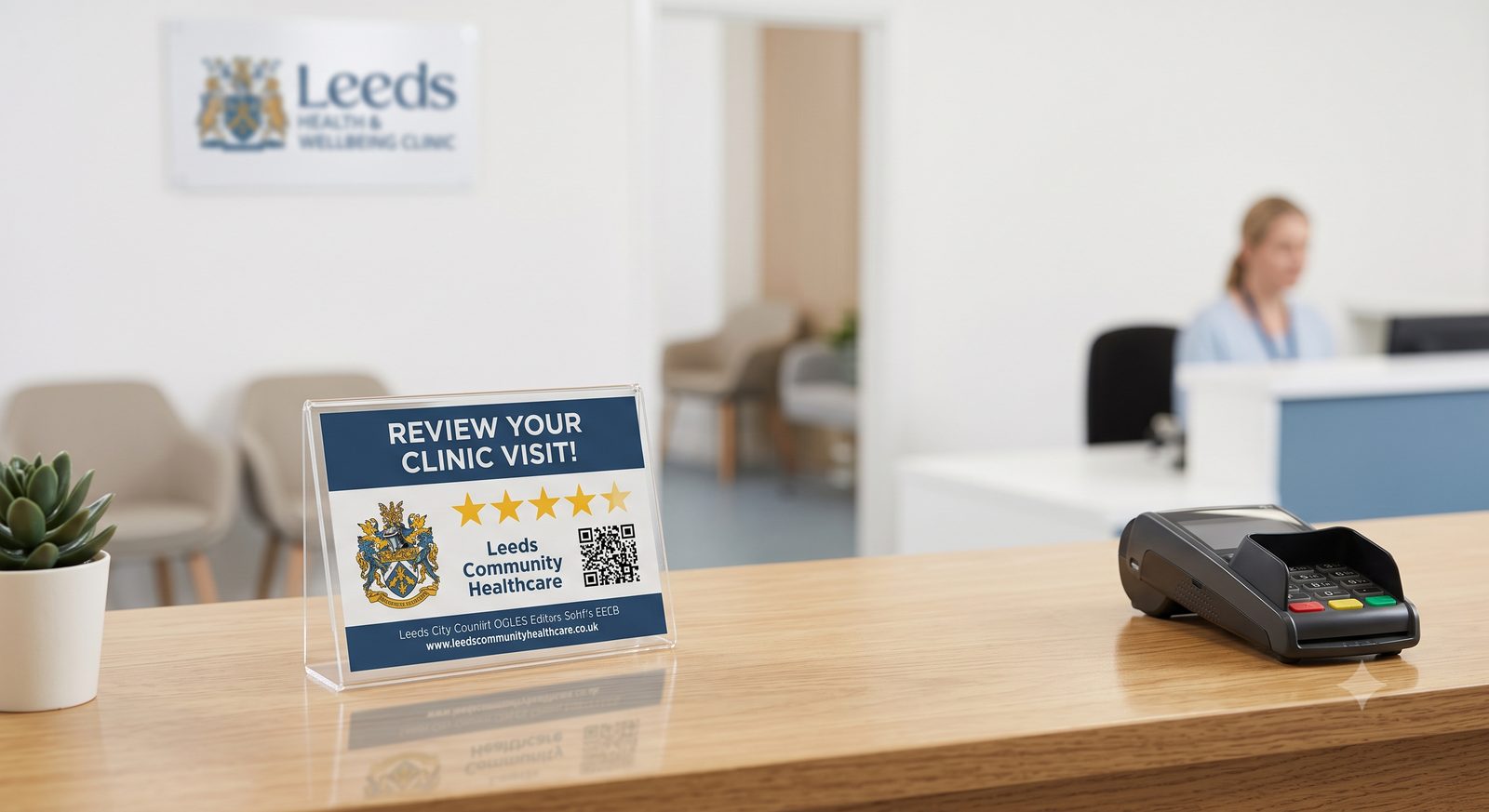
High-ticket decisions get researched properly
Someone choosing a dentist for £3,000 of implant work does not skim the star rating. They read the reviews — how many, how recent, and what they actually say. Same for a physio deciding where to send their back pain, or an owner choosing a vet for their dog.
This is the sector where a thin review profile is most expensive per lost patient. A practice with 200 reviews and a 4.8 average converts enquiries that a practice with 25 reviews simply never receives — because the second practice was never shortlisted.
Reviews and professional regulation — the important bit
Most clinics we speak to are not worried about whether review cards work. They are worried about whether they are allowed to use them. So it is worth being clear.
The GDC, GOC, GPhC, RCVS and CQC all take issue with the same things: incentivised reviews, selectively soliciting only happy patients, and anything that could identify a patient or disclose their treatment. The ASA and CAP Code take the same line for advertising generally, and the DMCC Act 2024 gives the CMA direct enforcement powers over fake and manipulated reviews.
A ReviewCue card sits comfortably inside all of that, because of what it doesn’t do:
- No incentive. Nothing is offered in exchange for a review. The card just makes leaving one easier.
- No filtering. It is displayed openly to every patient. It does not screen for satisfaction, and it does not route unhappy patients somewhere else — a practice known as review gating, which Google explicitly prohibits.
- No patient data. The card links to your public review page. It collects nothing, stores nothing and knows nothing about who tapped it.
- Patient-initiated. The patient chooses to pick it up, and chooses what to write.
What still sits with you as the practice: responding to reviews without confirming that someone is a patient or referencing their treatment, and following your own regulator’s current guidance. If in doubt, check with your indemnity provider or professional body — this page is general information, not regulatory advice.
Where to put them

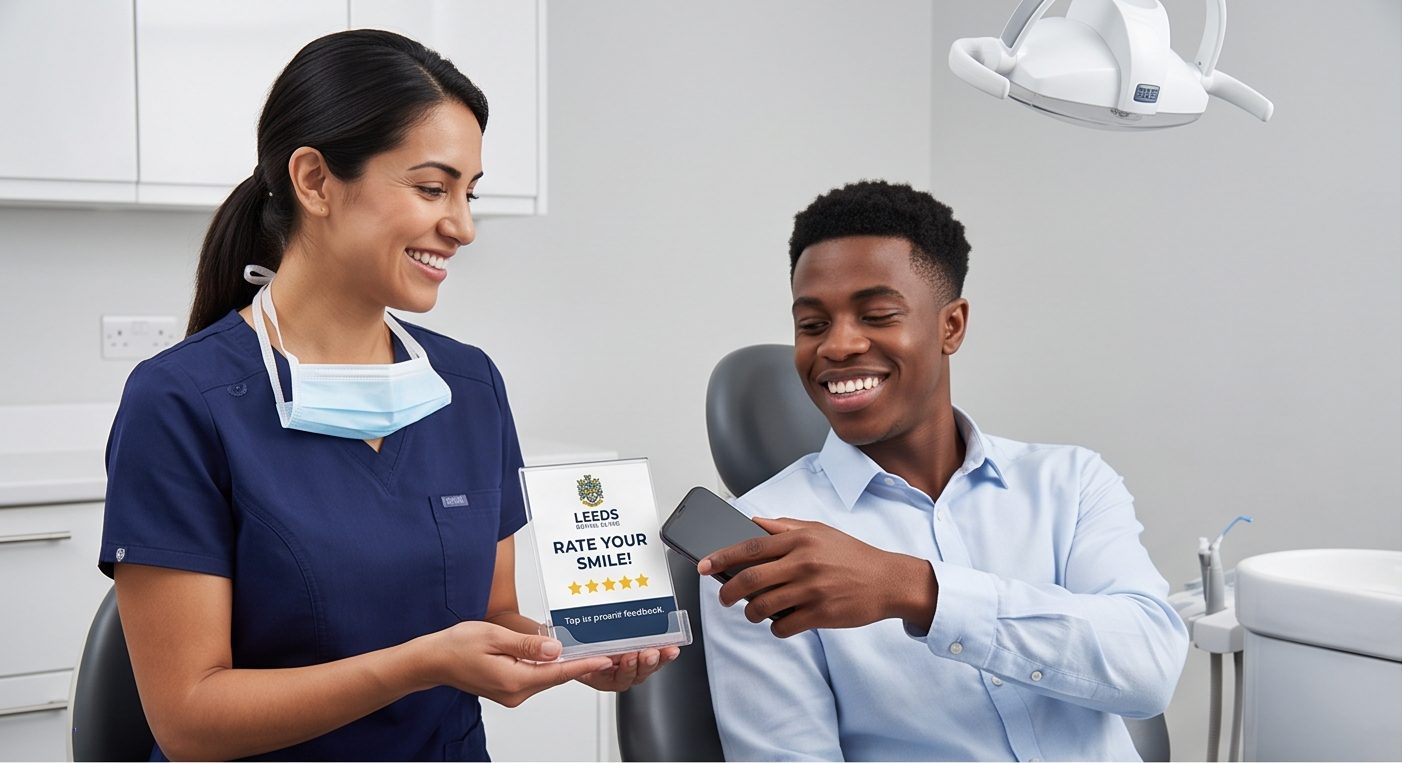
- Reception desk at checkout — the strongest placement. The patient is settling up, relieved it went well, phone already out.
- Appointment card holder — pairs with rebooking, which is the natural end of the visit.
- Treatment room — for longer appointments where there is genuine downtime.
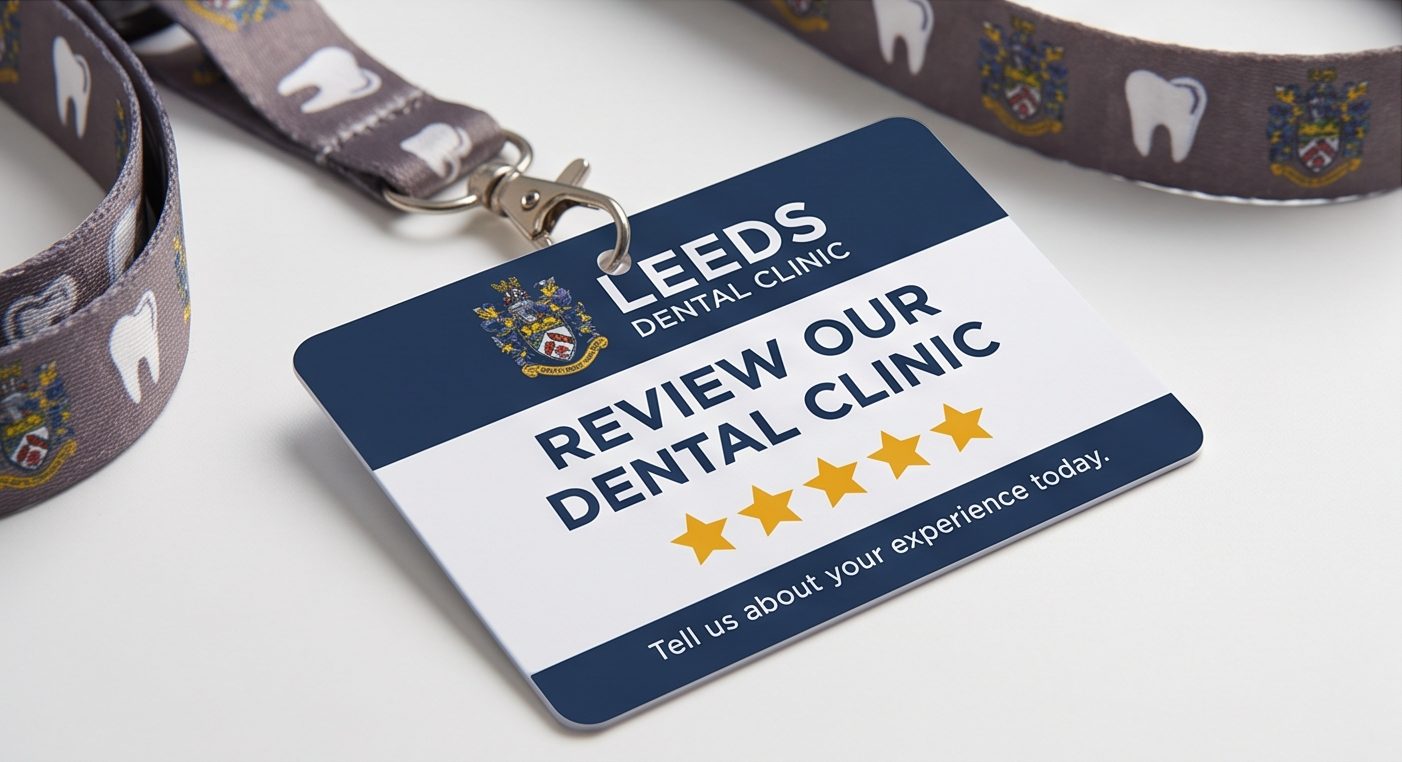
- Practitioner lanyard — for physios, mobile practitioners and home-visit vets.
- Waiting room — catches patients who arrive early.
Dual setup: Google for discovery, Trustpilot for credibility
Clinics are the one sector where we usually recommend running both, and it is worth understanding why they do different jobs.
Google is where local discovery happens. “Dentist near me”, “physio in Manchester”, “emergency vet” — these are all map pack searches, and Google reviews are what decide who appears in the top three.
Trustpilot does something different. It carries more weight for higher-ticket, considered decisions — implants, orthodontics, private surgery, hearing aids — where the patient is comparing providers over days rather than minutes, and wants an independent-feeling source.
A dual card gives the patient a simple choice screen. You build map pack visibility and comparison-stage credibility from the same tap. Ask us about dual setup.

What you get
- Free UK first class shipping on every order, no minimum spend
- Generic cards dispatched within 48 hours; branded in 2–3 working days after proof approval
- Wipeable PVC — suitable for clinical reception environments
- Printed QR code backup on every card, so it works on any phone with no app
- No patient data collected, stored or transmitted by the card
- Free remote reprogramming if your review link changes; full refund, no questions asked
Clinic FAQs
Does the card collect any patient information?
No. It is a link, not a form. Tapping it opens your public review page in the patient’s own browser. Nothing is captured by us and there is no GDPR processing to account for on your side.
Can we only show it to patients we know are happy?
We would strongly advise against it. Selectively soliciting reviews is review gating — Google prohibits it, and it is the practice most likely to cause you a problem with your regulator. Display it openly to everyone. In practice, clinics that do this still see overwhelmingly positive reviews, because most patients are happy.
How many does a practice need?
Most start with one stand per reception position plus one per surgery or treatment room. A three-surgery dental practice typically orders four or five.
Get started
One extra patient covers the cost many times over. Shop review cards and stands or request a free branded mockup and see your practice’s card before you commit.
Also serving salons and aesthetics, trades and automotive — see all industries we work with.